ClickCease

Tag Archives: cargo insurance

Mayhem and Unanticipated Liability – How to avoid it

We see many examples of disruptive events in logistics, resulting from erroneous bookings, delivery failures, reckless or negligent behavior, failure to insure, inadequate insurance, contractual liability, fraudulent parties, cargo loss or damage, or complex personal injury litigation.


All such scenarios of “What Can Go Wrong” – may be constructively viewed as underscoring the need to integrate sound risk management tips and insurance expertise in the business process.   Without it, transactions that look good from a marketing and immediate revenue perspective can end up a disaster — because the unanticipated and inconvenient decides to show up – somewhat like the “Mayhem” guy on the All-State commercial.  I relate directly to this analogy as I have spent a career, including 10 years as Vice President Risk Management (for an international multi-modal operation), dealing with scenarios  — “that could never happen”.    It seems that unfortunately and almost invariably — they do.


Examples of ‘What Can Go Wrong’ include the provision and use of carriage equipment.   A memorable scenario in my experience involves a motor carrier that received freight from the Shipper, in a sealed trailer licensed for road use, for interstate delivery.  The motor carrier was involved in an accident enroute, resulting in the fatality of a medical doctor.   The ultimate damages paid were $10 million.   The motor carrier in this instance had contractually indemnified the Shipper under a Services Agreement.  This Shipper had a Commercial Auto Liability Policy to cover their owned vehicles and a $25 Million Excess Policy.    In brief summation, under a Declaratory Judgment Ruling, the Court held that (i) the Shipper’s Auto Liability Insurance Policy covered their Trailer and the Accident, and (ii) under the (typical) definition of “Who is Insured” and the prioritization of Coverage language in the Shippers Auto Insurance Policy, the Shipper’s insurance Policies were obligated to pay approximately 70% of the damages  – or roughly $7 Million in this instance, and (iii) the motor carrier and their insurers paid the remainder (whereby the terms of the Service Agreement were satisfied).


This Shipper could not have been more dismayed — and clearly would have benefited from more proactive Risk Management and Insurance handling expertise.   It is important to note that the Shipper in this example could have been any provider of licensed carriage equipment, including an equipment provider entity under common ownership with a Broker.


Different scenarios of a Broker providing road use licensed trailers or containers attached to chassis (“Equipment”), to third-party Motor Carriers, in support of the freight Broker business model, are often raised for evaluation.

Concerning the risk element of this activity it must be considered that a licensed for road use trailer or container bolted to a chassis, is defined under law as a Motor Vehicle (See Footnote 2).    Underscoring this risk consideration, is that provision of such Equipment under any auspices, constitutes a motor carrier role — not the role of freight Broker (See Footnote 1) – and can incur motor carrier liability.  The Equipment provider, by inference, incurs shared or primary responsibility for compliance with all pertinent statutory definitions, regulatory requirements and FMCSRs pertaining to a Motor Carrier. Hence, because the act of leasing or interchanging Equipment to motor carriers extends beyond the role defined for freight Brokers under federal Statute and Regulation, it is arguably not protected under the enabling Statute pertinent to a freight Broker (See Footnote 1).  Nor is the provision of Equipment typically intended coverage under insurance Policies written for freight Brokers, as such Policies are designed to cover the liability of the Insured Party arising from their role as a freight Broker – not from the role of motor carrier.    An entity providing road licensed carriage Equipment to motor carriers, is best advised to purchase a Truck Liability Policy designed to cover Motor Carrier liability – or an alternative Liability Policy providing essentially the same or similar coverage.

For these reasons, I recommend that the Equipment leasing/interchange activity be conducted as a separate business enterprise and not as a supplemental support to the Broker operation, or a joint venture.  It should be housed under a separate legal entity from that of the freight Broker – with separate branding, separate contracts, separate management, and separate insurance, to achieve, to the extent possible, a legal partition between this Equipment activity and the Broker operations.  Such an Equipment entity should also make use of an Interchange/Lease Agreement with motor carrier users of the Equipment.  Some of this Equipment (i.e., trailers) could potentially be used by a third party carrier to haul cargo tendered by the Broker under common ownership with the Equipment provider entity, but not by specific design or agreement.   This activity is thus conducted independent of and not under the auspices of any Carrier or Shipper contract or booking communication for cargo tendered to or by the Broker.

A separate but related question arises as to whether the Equipment provider entity should own or lease the Equipment they provide to third party motor carriers.  There are several concerns with leasing and then sub-leasing Equipment, including the following:

— The original Lease Agreement may prohibit “sub-leasing” of the leased Equipment by the lessee.  Hence, to this extent, the described business model, where the Equipment is lased and then subleased, is in breach of the Lease Contract.

— Also to this extent, the unethical or illegal business practices exclusion may be invoked under a typical insurance Policy, including a Policy that may be written for this Lessee – thereby precluding any insurance coverage that may otherwise have been provided.

— The Lease Agreement may be silent on the issue of sub-leasing but stipulate that the third party motor carriers in possession of the trailers are the “Agent” of the Lessee.  Such a stipulation causes the Lessee Entity to contractually assume liability for the role of motor carrier, in addition to any liability incurred under federal and state law.

— For the reasons cited herein, and others related to sound business operation, the described lease/sub-lease scenario might be preferably avoided.

A business strategy that does not engage Risk Management and Insurance Expertise to understand and manage the roles of involved parties, their contractual relationships and their insurance, may be inherently problematic, involving unanticipated liability, and uninsured risk —  and is likely to invite Mayhem.


Footnote 1 — 49 U.S.C. §13102. Definitions  “(2) Broker.—The term “broker” means a person, other than a motor carrier or an employee or agent of a motor carrier, that as a principal or agent sells, offers for sale, negotiates for, or holds itself out by solicitation, advertisement, or otherwise as selling, providing, or arranging for, transportation by motor carrier for compensation.”     49 C.F.R. 371.2, states that a  “Broker means a person who, for compensation, arranges, or offers to arrange, the transportation of property by an authorized motor carrier. Motor Carriers, or persons who are employees or bona fide agents of carriers, are not brokers within the meaning of this section when they arrange or offer to arrange the transportation of shipments which they are authorized to transport and which they have accepted and legally bound themselves to transport.”

Footnote 2 — 49 U.S. Code § 31301 – Definitions  “(12) “motor vehicle” means a vehicle, machine, tractor, trailer, or semitrailer propelled or drawn by mechanical power and used on public streets, roads, or highways, but does not include a vehicle, machine, tractor, trailer, or semitrailer operated only on a rail line or custom harvesting farm machinery.”


The Future of Self-Driving Trucks for Cargo Delivery

Self driving truck for cargo delivery

Self-driving cars are ubiquitous in the news lately, though you don’t hear enough about the future of self-driving trucks. It’s not that it’s not happening, because we’re seeing a lot of experiments with them now.

One of the most recent tests is through Daimler and a semi-autonomous freight truck. This new truck is on a fast-track to compete with Google in getting cars and trucks on the road without drivers.

The question is, will this truly affect cargo delivery truck driver jobs? As a subject worthy of debate, it’s worth exploring the impact.

How Soon Will We See Self-Driving Trucks On Our Highways?

Daimler above already has their self-driving truck on the highways of Nevada. Since then, other trucking companies have begun to experiment doing the same thing. Company names like Otto, Volvo, and Peterbilt have joined Daimler in creating self-driving trucks across our nation’s highways.

You’re seeing a push to get these out there because of the economic benefits compared to ordinary self-driving cars. Considering many of them have far more efficiency in how they operate and in stopping for fuel, the argument is how they’re going to complement cargo delivery trucker jobs.

Will Self-Driving Trucks Help or Hurt Cargo Delivery Drivers?

One problem not usually addressed is the shortage of truck drivers out there. Reports are the industry is short over 40,000 drivers as of 2015. This shortage has expectation to grow exponentially into the next decade.

With this in mind, self-driving trucks for cargo delivery could help many existing drivers under pressure to keep up their duties. So many truckers already suffer from sleep deprivation due to long driving hours.

A self-driving truck can alleviate these pressures of truckers while merely adding to their jobs rather than take them away.

It’s worth thinking about, despite self-driving trucks being a certainty on all our roads within the next two years.


Visit us at Logistiqins.com to use our resources for risk management consulting services for the freight broker industry.

Cargo Liability Insurance Might Save Your Company

Transporting perishable cargo, like food items, is a high liability load for a freight carrier. Can a shipper reject a load with a broken seal even if the cargo is undamaged? One case study, Oshkosh Storage Co. v Kraze Trucking, LLC (Wisconsin, 2014), might answer this question and confirm the important of cargo liability insurance for a freight company.

The Circumstances

Kraze was to deliver a shipment of cheese from Minnesota to Wisconsin for Oshkosh.  A refrigerated trailer was sealed at time of pick-up.  Written instructions from shipper to the driver noted that a broken seal or seal not matching the manifest would result in rejection of shipment. Verbal instructions from shipper to the driver indicated that Oshkosh personnel would break the seal upon cargo delivery in Wisconsin. Posted signage at check-in also indicated drivers were not to break seals, that Oshkosh staff would verify seal number and break seal before unloading shipment. Upon delivery the driver parked, broke the seal and opened the trailer. Oshkosh rejected the entire load.

What Happened

The carrier’s insurer salvaged the load at a nearly 30% loss of the original contract price. Oshkosh made a claim under the Carmack Amendment against the carrier, citing the broken seal resulted in “actual loss or injury”, the cheese damaged due to loss of integrity. The carrier argued that a broken seal was not sufficient evidence that the cargo was damaged and did not have direct bearing on the goods such as tampering or direct harm.

What To Learn

The cargo had to be sold at a discounted price because the broken seal affected the integrity guaranty from Oshkosh to consumers.  The carrier was deemed negligent for breaking the seal. The decrease in product value was defined as an “actual loss or injury”. A broken seal by the carrier makes it impossible to prove that goods have not been tampered with and a food product contaminated. Food distribution requires an extra care of duty toward the public for shipment seals to remain intact. Without the protection of cargo liability coverage, the carrier would have suffered an entire loss, as well as payment to the shipper to mitigate damages.

A single case like this can be financially devastating for a freight company. Is your cargo liability insurance adequate? Call a cargo liability insurance expert and find out more about what you need for better coverage.

Freight Insurance Brokers and Evolving Maritime Risks

As technological advances and global developments change the maritime industry, cargo and freight insurance brokers might want to reevaluate their insurer relationships.  Maritime risks have moved beyond the peril of rough seas and insuring against hazards is increasingly complex. Changes that are impacting risk management in the maritime insurance industry include the following.

Although technology has made the maritime industry more efficient, it has also increased the threat of cyber attacks.  Electronic transmissions automatically tracking cargo are at risk of interception.  Sophisticated hackers possessing the wherewithal to breach vessel propulsion and navigating systems can interrupt vessel operation causing delay and damage to cargo. Cargo & freight insurance brokers should keep the following case study in mind to exercise caution.

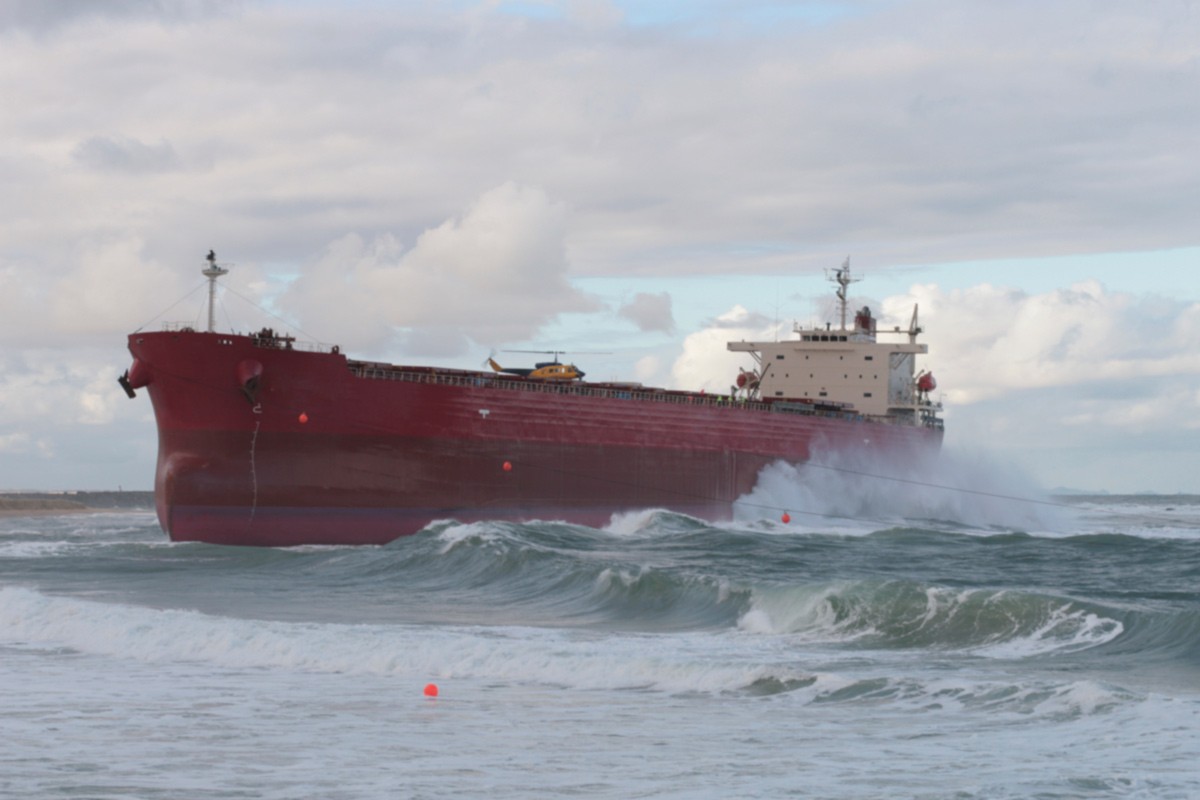
Last December marked the arrival of the biggest container ship ever to a U.S. port.  Most ports do not yet have the infrastructure, terminal space, dock equipment and rail connections to handle these new megaships.  As international trade expands putting more cargo on bigger ships, there is a greater possibility for maritime risks such as catastrophic loss from an accident in port or at sea.

Widely occurring political unrest threatens ocean travel and creates more maritime risks. Pirates off the coast of Africa and criminal gangs operating in South East Asia attack ships for ransom or for cargo.  In 2015, a Libyan warplane bomb killed two crew members when it hit a Greek oil tanker berthed at a Libyan port.

Now that Arctic trade routes are available, shipping companies are evaluating them as a way to save time and money.  However, a lack of infrastructure and emergency services makes responding to a casualty difficult.

Finding and retaining well-trained and competent crews is challenging when new and changing technologies demand specialized training.

To service the needs of a growing international trading community, there are many new entrants to the marine insurance market.  This increased competition is keeping insurance costs reasonable for shippers and cargo & freight insurance brokers. However, it also dilutes the available talent as there is a greater need for experienced underwriters.  The best protection for your cargo is working with a reputable company with expertise in compliance, underwriting and risk management.

####

ABOUT:

LOGISTIQ Insurance Solutions, a GSIS, Inc. company, provides cargo insurance products and services, as well as general risk management consultation, for freight companies across the world. The company has a diverse array of insurance products, including those encompassed by its unique Broker Shield program. LOGISTIQ is devoted to building long-lasting relationships with clients, and provides exemplary service and prompt quotes. More information about LOGISTIQ. can be found on the company’s website, located at https:// logistiqins.com.

Supply Risk Management For Freight Brokers

We saw a great article published in Logistic Management Magazine based on a study by A.T. Kearney, the global management consulting firm. In this study, the author focuses on identifying the importance of supply risk management in the global supply chain, which could affect a variety of LOGISTIQ’s clients including freight brokers and freight forwarders. This article emphasizes the need for freight brokers and freight forwarders to make sure that they have adequate Contingent Cargo Legal Defense Coverage and Auto Liability Insurance for their cargo so that the risks are minimized. The article also indicates that “supply management leaders have secured their position as a strategic business function by focusing on high-impact, high-visibility activities. However, managing risk has fallen to the bottom of the list of priorities, say analysts.”

You can see the article and find out more about supply risk management in detail by pressing here. Check out LOGISTIQ’s risk management consulting services if you would like to be advised on more best practices.

=====
ABOUT LOGISTIQ:

LOGISTIQ Insurance Solutions, a GSIS, Inc. company, provides cargo insurance products and services, as well as general risk management consultation, for freight companies across the world. The company has a diverse array of insurance products, including those encompassed by its unique Broker Shield program. LOGISTIQ is devoted to building long-lasting relationships with clients, and provides exemplary service and prompt quotes. More information about LOGISTIQ. can be found on the company’s website, located at https://logistiqins.com.

Categories
Quick Links

Get A Quote

Logistiq offers great programs and great pricing. Contact us to request a quick quote.

Get Quote
Follow Us
GOT QUESTIONS. WE HAVE ANSWERS.

Call us now and speak to a LOGISTIQ industry expert. We look forward to your call.